


Metabolism Research Reagents Catalog Download Form
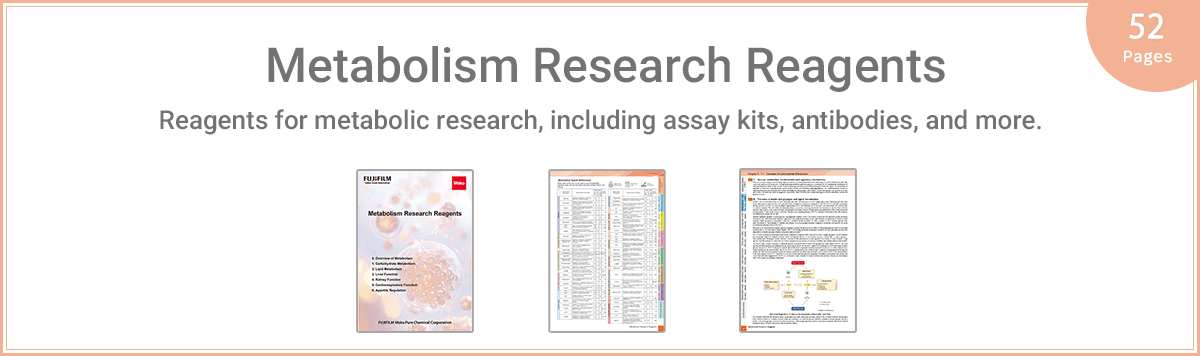

- Table of Contents
0. Overview of Metabolism ~Basic and Future Prospects of Modern Metabolism Research~
- Basic Concepts and Physiological Significance of Metabolism
- Integrated understanding of metabolic networks and the role of systems biology
- Foundations and applications of metabolic tracer technologies
- Association between metabolic abnormalities and diseases :from metabolic syndrome to cancer metabolism
- State-of-the-art technologies and future perspectives
1-1 Overview of Carbohydrate Metabolism- Glucose metabolism: fundamentals and regulatory mechanisms
- The roles of insulin and glucagon and signal transduction
- Systemic effects of abnormal glucose metabolism (diabetic neuropathy, diabetic retinopathy, and diabetic nephropathy)
- Novel regulators of glucose metabolism and prospects for molecular-targeted therapy
2. Lipid Metabolism
2-1. Overview of Lipid Metabolism- Molecular mechanisms of fatty acid metabolism and roles of mitochondrial lipid metabolism
- Lipidomic analysis and adipose tissue diversity
- Association between abnormal lipid metabolism and immune and inflammatory responses
- Novel regulators of lipid metabolism and therapeutic strategies
3. Liver Function
3-1. Overview of Liver Function- Overview of hepatic metabolic functions (carbohydrates, lipids, and proteins)
- Detoxification function and metabolic regulation of the liver and the latest insights into MASH/MASLD
- Roles of microbiome and autophagy in the liver
- Novel regulators of hepatic metabolism and therapeutic strategies
4. Kidney Function
4-1. Overview of Kidney Function- Kidney-specific energy metabolism and metabolic stress response
- Metabolic reprogramming and mitochondrial dysfunction in chronic kidney disease
- Interaction between kidney metabolism and hormonal regulation
5. Cardiorespiratory Function
5-1. Overview of Cardiorespiratory Function- Substrate switching mechanism in cardiac muscle metabolism and metabolic reprogramming in heart failure
- Blood circulation through the heart and lungs and blood pressure regulation
- Pulmonary metabolism and regulatory mechanisms of oxygen utilization efficiency
- Mitochondrial dysfunction and cardiorespiratory metabolic analysis using the latest imaging techniques
6. Appetite Regulation
6-1. Overview of Appetite Regulation- Regulation of feeding behavior through hypothalamic neuronal circuits and hormonal signaling
- Regulation of feeding through the intestinal environment and metabolic sensors (AMPK and mTOR)